Read a version of this story in Tibetan
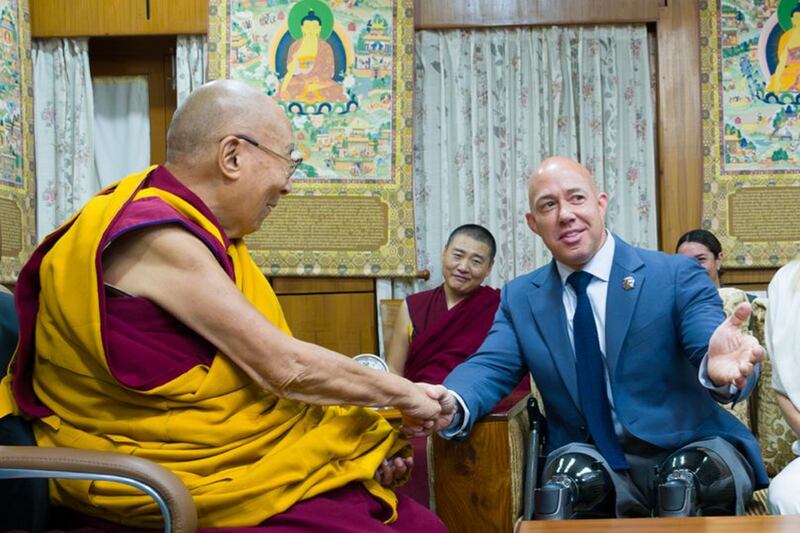
DHARAMSALA, India – A bipartisan delegation of U.S. lawmakers Wednesday told Radio Free Asia that China is a threat for engaging in transnational repression, after a meeting with the Dalai Lama, Tibet’s exiled spiritual leader, in his home.
During the meeting the Dalai Lama explained to the delegation how he has spent the majority of his life as a refugee in India, continuing Tibetan traditions and supporting the exile government headquartered in Dharamsala, after fleeing Tibet in 1959.
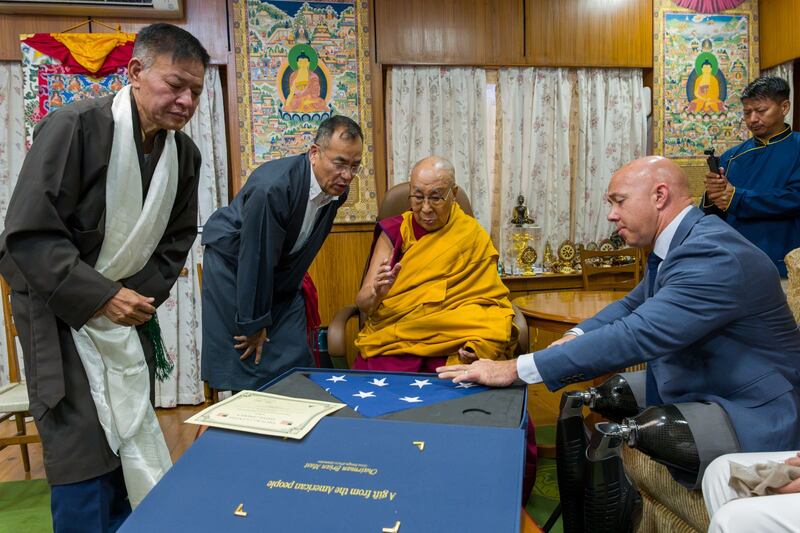
The delegation, led by House Foreign Affairs Committee Chairman Brian Mast, presented the spiritual leader with a gift of a U.S. flag and seemingly expressed support for Tibetan independence.
“To keep the flame of Tibet alive is to keep the flame of freedom alive,” said Mast in video footage of the meeting, edited and released by the Dalai Lama’s office. “Our flame of freedom was established 250 years ago and I flew this flag over our nation’s capital on our 250th celebration of independence, and we hope that you will celebrate that too one day.”
The bipartisan delegation also included Republicans James Gallagher and Jimmy Patronis, and Democrats Haley Stevens and Shri Thanedar.
“Inalienable rights”
After the meeting, Mast slammed China for engaging in transnational repression in response to a question from RFA about Beijing’s ethnic unity law passed this year, and how it applies to members of the Tibetan diaspora.
“China will reach to anywhere that they can,” said Mast, providing several examples of how the Chinese government has been known to silence its critics overseas. “They’ve proven that they will observe people. They will send spies to different countries. They will send police to different countries to observe anybody that they can and repress what they do not want to see.”
Mast said China was threatening in other ways, including through the theft of intellectual property, espionage, and organ harvesting.
“We do not believe in the same things. We believe in freedom and democracy for all of our people, that people are born with certain inalienable rights,” he said. “These are fundamental differences between what China represents and what America represents and what the people of Tibet seek.”
Across the aisle
Stevens said that it was important for the delegation – usually political opponents – to come together in “a bipartisan way for freedom.”
“I came here with a Republican leader who is close to President Trump. I am not afraid to say it because we joined and linked forces,” the Michigan representative said. “This is calling on us to dig deep, to recognize that this is a tough moment, that we are losing sight of why we need to invest and support democracy in the Tibetan people.”
Prior to their stop in Dharamsala, the delegation had been in New Delhi earlier in the week to discuss bilateral cooperation with senior Indian government defense and foreign affairs officials.
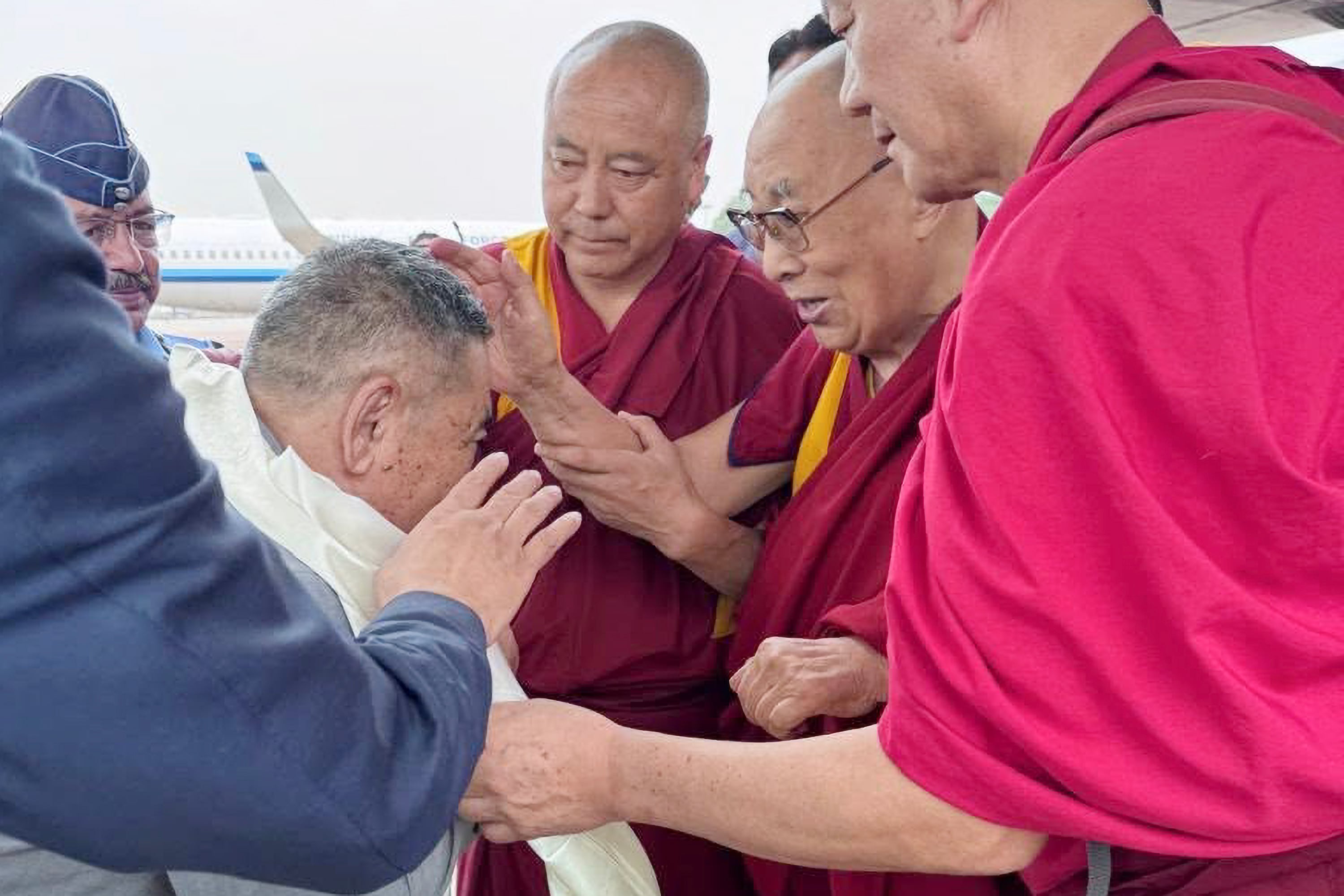
When they arrived in Dharamsala on Tuesday, Mast told reporters the delegation was there to meet with the Dalai Lama and the Tibetan community, whom the United States has supported for many years.
When asked by RFA if he had a message for the Tibetan people, Mast said, “We stand with you.”
Edited for RFA Tibetan by Tawang and RFA English by Eugene Whong.